


 .
. 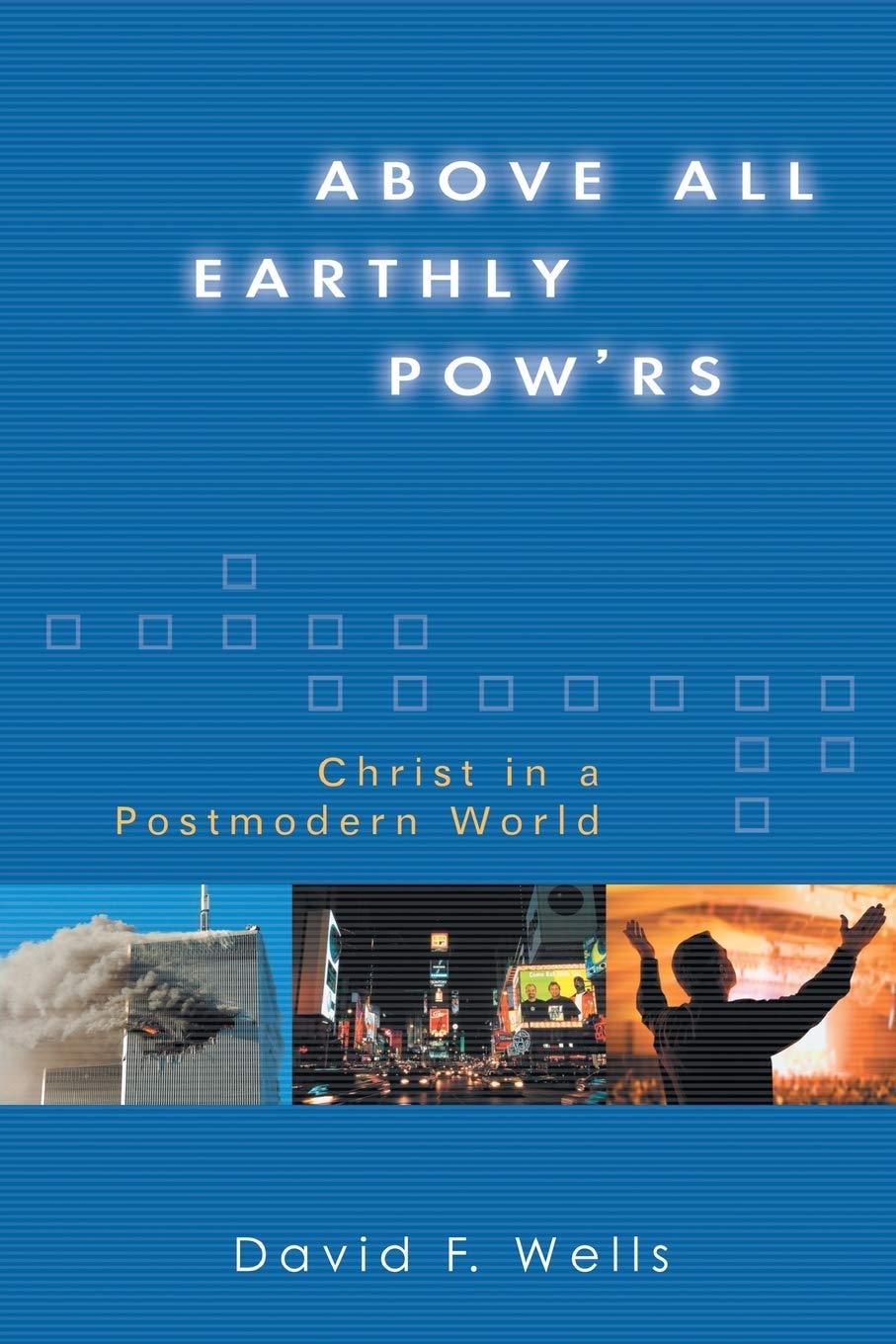
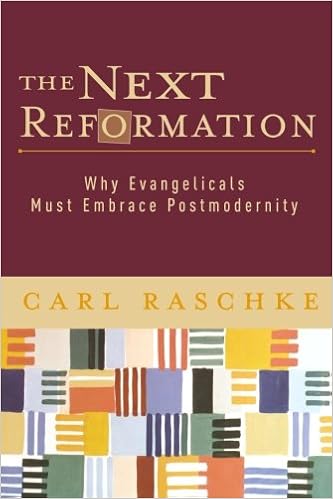
This week, I have summarized two evangelical approaches to the arrival of the postmodern era: Carl Raschke’s challenge for evangelicals to embrace postmodernism and David Well’s challenge to resist it.

It is difficult to contrast the visions of David Wells and Carl Raschke because these two books are written for different purposes. Wells’ book puts forth a robust Christology that he hopes will sustain the evangelical church during the postmodern era. Raschke seeks to provide a philosophical justification for evangelicals to embrace several aspects of postmodern thought.
Despite the different purposes of these books, one can still discern several points of agreement and disagreement. Furthermore, one can find strengths and weaknesses in both views, along with some valuable insights that lead to practical implications for ministry in a postmodern world.
A Few Points of Agreement
We begin with points of agreement. Both Wells and Raschke see the Reformation of the sixteenth century as a high point in the development of theology. Both authors showcase a deep devotion to the Reformation, even if the aspects they admire are somewhat different.
Wells concentrates on the Protestant doctrine of justification by faith alone as a way to counter the idea that salvation can be found within the human soul. Raschke focuses on Luther’s theology of the cross as a way of summoning us back to faith alone, instead of faith in our human reason.
The authors also agree that postmodernism rightly critiques modernism at many points. Wells applauds the introduction of certain postmodern sensibilities into philosophy and theology, a development that tempers the unfettered optimism of unrestrained rationalism.
Raschke goes further than Wells in his appreciation for postmodernism’s critique of modernist thought. But both authors see at least some good in the postmodern turn, even if ultimately, they disagree on how much good is represented therein.
Disagreement #1: Postmodern Promise versus Postmodern Peril
Wells and Raschke disagree in their assessments of postmodernism. Raschke believes that the postmodern turn holds out great promise for Christianity and therefore postmodernism should be embraced. Wells believes postmodernism to be simply another manifestation of modernism and therefore should be confronted. In fact, Wells goes so far to say that “confrontation is always at the heart of the relation between Christ and culture because that relation is one of light in its relation to darkness…”
I agree with Wells that postmodernism is ultimately as faithless as modernism, even if the new philosophy offers us a few areas of opportunity. But I do not share Wells’ pessimism concerning the relationship between Christ and culture. It would help if Wells would define what he means by “culture.” If our “culture” is becoming increasingly postmodern, it would be more prudent to say that we should stand in opposition to those aspects of postmodern culture that necessitate confrontation.
Despite his somewhat ambiguous view of “culture” that needs to be confronted, Wells is correct to show how postmodernism is linked to religious pluralism in our society. Raschke devotes too little attention to the philosophical pluralism that has attached itself to postmodernism’s rejection of metanarratives. A better way forward would be to recognize the strengths of the postmodern critique of modernism while forcefully rejecting the weaknesses.
Disagreement #2: Which Reformation Principles Do We Apply?
As has been mentioned above, Raschke and Wells appeal to the Reformation to make their case. But these authors apply Reformation principles in different ways.
Wells directs us back to historic Protestant doctrines, church confessions and traditional practices. Raschke points us toward Pentecostalism, where we discover a more experiential faith that emphasizes grace and mystery and the limitations of our own reason.
If taken to extremes, both of these prescriptions could be unhelpful. Much of what passes as “postmodern ministry” today is more stylistic than substantive, as even Raschke concurs. But I have yet to see strong, evangelistic churches that have embraced postmodernism as an orienting philosophy.
At the same time, Wells’ prescription to return to historic Protestantism could also lead to weaker churches if Protestant doctrine is emphasized to the exclusion of experience. It is easy to swing the pendulum to one side in reaction to the other (be it experience-based Pentecostalism or confession-based Protestantism). Both of these aspects belong together.
I agree with Wells that the temptation today is decidedly in favor of personal experience than submission to an outside authority (such as the Scriptures or the traditions of the Church). Therefore, Raschke’s suggestions are like prescribing sugar candy as a cure for diabetes. Our society has already moved in a very experiential direction. The Church must resist this development, not embrace it.
Disagreement #3: Scripture as Propositional or Personal
Another area of disagreement between Wells and Raschke concerns the nature of Scripture. Raschke views the Word of God as vocative, not propositional. Wells does not specifically address this subject in his book, but I have little doubt that he would settle on the propositional side (with a nod to the metanarrative expressed by the Scriptures).
Raschke sets up a false dichotomy when he demeans propositional truth in favor of a purely relational approach. Questions regarding the nature of Scripture and the doctrine of inerrancy are not irrelevant or modernist. These questions go to the very heart of our confidence in the Scriptures.
Raschke is right to point out that evangelicals have failed to take Scriptural commands seriously at times. But every generation of Christians ultimately fails to obey the “vocative” of the Word of God at some points. To write as if the authority of Scripture depends upon God’s use of it in our personal lives rather than in the Scriptures itself is to set up a false choice. Scripture is authoritative both because of what it is and because of what it does.
The inerrancy debate helps us to have confidence in the truth of Scripture as it is, so that we then are able to submit to its commands. Inerrancy does not claim that some sort of “confessional insurance” is necessary before we can trust God. Inerrancy merely reinforces the beautiful truth that God, when he speaks, always tells the truth.
It is unhelpful to say that Scripture does not give us facts about God, but God himself. The truth is that Scripture gives us both.
I recognize that traditional evangelicalism has erred in overemphasizing the propositional nature of Scripture to the exclusion of its narrative structure and overarching Story. But surely the answer is not to abandon the nature of propositional truth completely, but to use the postmodern critique as a way to help us see the propositional and relational natures of truth as complementary, not in competition.
Concluding Thoughts
Every generation of Christians faces new challenges to the Christian faith. In the work of David Wells and Carl Raschke, we can see some of the areas in which evangelicals agree and disagree as to how best to respond to the rise of postmodernism.
The best way forward is to incorporate some of the valuable insights of postmodern thinking without sacrificing the historic, propositional truth claims of Christianity throughout the centuries. Discerning which aspects of postmodernism should be embraced and which aspects should be resisted is no easy task. But this ongoing task is of paramount importance if we are to faithfully proclaim the gospel in our contemporary world.


